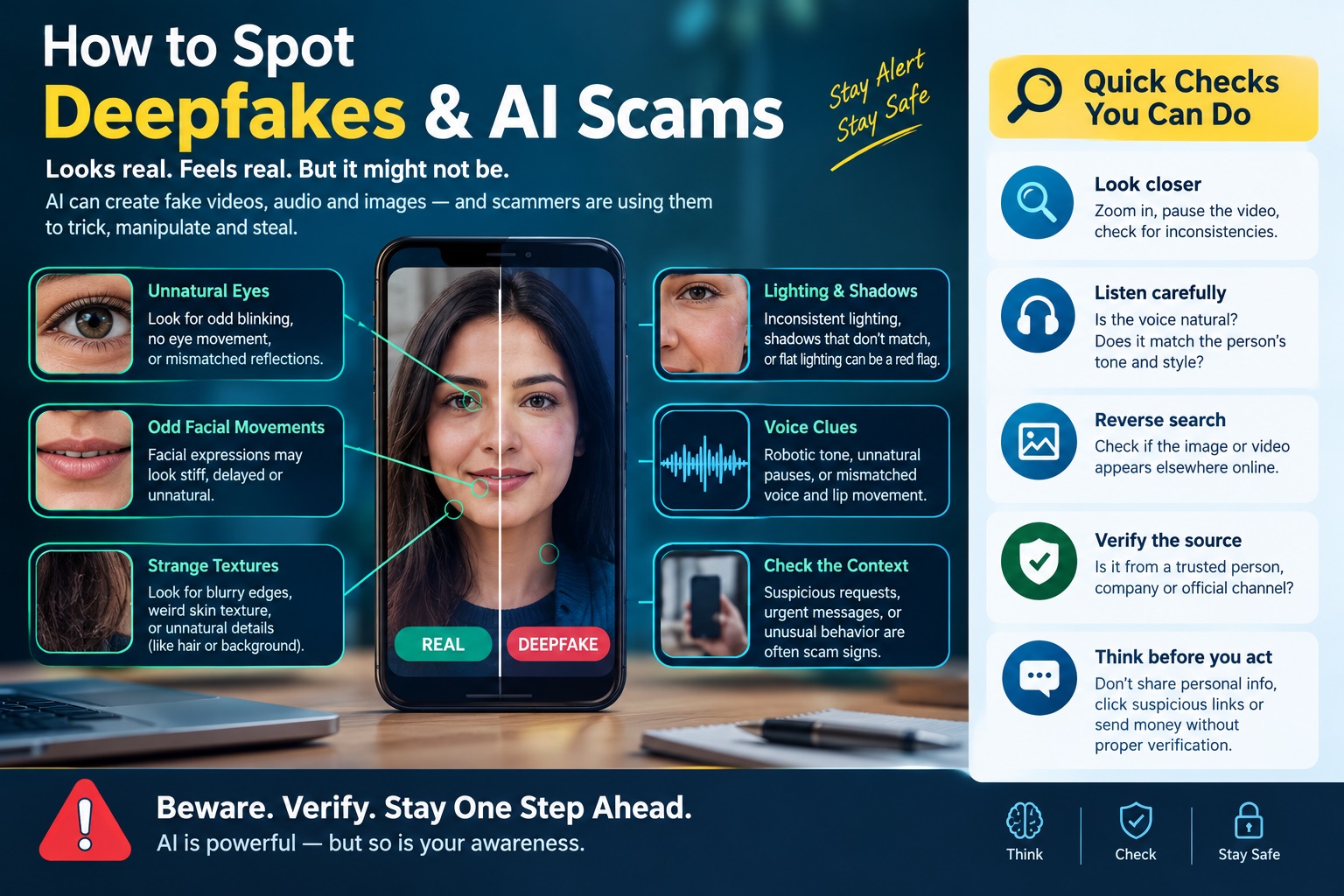
AI has made it easy to copy a face, clone a voice or write a flawless scam message. IBM reports that AI-driven attacks rose 56%, led by deepfake impersonation and AI-enabled malware, which is why deepfakes remain one of the most urgent AI issues of 2026.
The key lesson: you can't always detect a fake by looking or listening. What works better is a calm routine that verifies requests through a second channel. This guide covers both the warning signs and that routine.
In This Guide
- What is a deepfake?
- 10 warning signs
- Voice-clone scams
- A simple verification routine
- What to do if you're targeted
- Tips for creators and businesses
What Is a Deepfake?
A deepfake is synthetic video, audio or imagery created or altered with AI to make it seem that a real person said or did something they never did. Scammers combine deepfakes with urgency and emotion to pressure people into sending money, sharing codes or clicking harmful links.
10 Warning Signs
None of these proves a fake on its own, and high-quality fakes may show none of them. Treat them as reasons to slow down and verify.
- Unusual urgency. "Do it now, don't tell anyone" is the classic scam pressure.
- A request involving money or codes. Gift cards, crypto, bank transfers and one-time passwords are common targets.
- A new number or account claiming to be someone you know.
- Odd blinking, lip sync or facial edges. Mouth movements may not match the audio, and edges around hair or glasses may shimmer.
- Flat or oddly consistent voice. Strange pauses, robotic rhythm or missing natural breathing.
- Lighting and shadows that don't match the background.
- Poor video quality used as an excuse. "Bad connection" can hide visual flaws.
- Refusal to do a live, unscripted check. Asking a personal question or a simple movement is awkward for a fake.
- Too-good-to-be-true offers, especially celebrity endorsements of investments.
- Perfect but slightly generic writing in emails or messages that doesn't sound like the real sender.
Voice-Clone Scams
Scammers can copy a voice from a short audio clip taken from social media or a voicemail. They then call a relative or colleague pretending to be in trouble, or a boss demanding an urgent payment. A familiar voice is no longer proof of identity. Hang up and call back on a number you already trust.
Smart Copy PRO
Turn copied text into summaries, professional emails and LinkedIn-ready content in seconds.
Get Smart Copy PRO →A Simple Verification Routine
- Pause. Urgency is the scammer's main tool, so take a minute.
- Switch channels. Call or message the person on a number or app you already know.
- Ask something only they would know, not something findable on social media.
- Agree on a family or team code word for emergencies and payment requests.
- Never share OTPs, PINs or passwords, no matter who is asking.
- Check the source. For viral videos, look for coverage from trusted outlets before sharing.
- Use two-step verification on important accounts, and limit publicly posted voice and video.
What to Do If You're Targeted
- Stop communicating and don't send money, codes or personal documents.
- If money was sent, contact your bank right away and ask about stopping or reversing the transfer.
- Save screenshots, numbers, links and messages as evidence.
- Report the incident to your local cybercrime authority and to the platform involved. In India, you can report online financial fraud on the national cybercrime reporting portal or through the cybercrime helpline. Check the official government sites for current contact details.
- Warn family and colleagues, since the same scammer often targets several people.
Tips for Creators and Businesses
- Set a written approval process for payments, with a second person confirming any large or unusual request
- Train staff to expect AI-polished phishing, since typos are no longer a reliable clue
- Label your own AI-generated media clearly, so audiences can trust what is real
- Use official channels for announcements, so fake accounts are easier to spot
Detection technology, including computer vision, is improving, but habits remain your strongest defense.
Key Takeaways
- You can't always detect a deepfake by eye or ear, so verify through a second channel.
- Urgency plus a request for money or codes is the biggest red flag.
- A familiar voice or face is no longer proof of identity.
- Use code words, two-step verification and never share OTPs.
- Report incidents quickly to your bank and cybercrime authorities.
Frequently Asked Questions
What is a deepfake?
A deepfake is synthetic video, audio or imagery created or altered with AI to make it look or sound like a real person said or did something they did not.
Can I always spot a deepfake by looking closely?
No. High-quality fakes can be very hard to detect by eye or ear. Verifying through a second, trusted channel is more reliable than judging visual flaws alone.
How do voice-clone scams work?
Scammers copy a person's voice from short audio samples and call relatives or colleagues pretending to be them, usually creating urgency and asking for money or sensitive information.
What should I do if I think I've been targeted?
Stop communicating, don't send money or codes, contact your bank immediately if money moved, save evidence and report the incident to your local cybercrime authority or the platform involved.
Conclusion
Deepfakes work because they exploit trust and urgency, not because we're careless. A short pause, a callback on a trusted number and a family code word defeat most attacks. Share this guide with relatives who are less familiar with AI, since they are often the ones targeted first.
Explore More on BITOMANCY
Want more practical AI and technology guides? Visit the BITOMANCY homepage for more articles on artificial intelligence, automation, SEO and emerging technology.