Terms like AI guardrails, responsible AI and AI observability are climbing fast in search trends, according to Exploding Topics' list of top US topics this month. The reason is simple: as companies move AI from demos into customer-facing products, the cost of mistakes goes up.
This guide explains what guardrails are, how they relate to responsible AI, the main types you will meet, and a practical checklist you can apply even if you are a solo creator or small business.
In This Guide
- What are AI guardrails?
- What is responsible AI?
- Types of guardrails
- Real-world examples
- A practical checklist
- What guardrails can't do
What Are AI Guardrails?
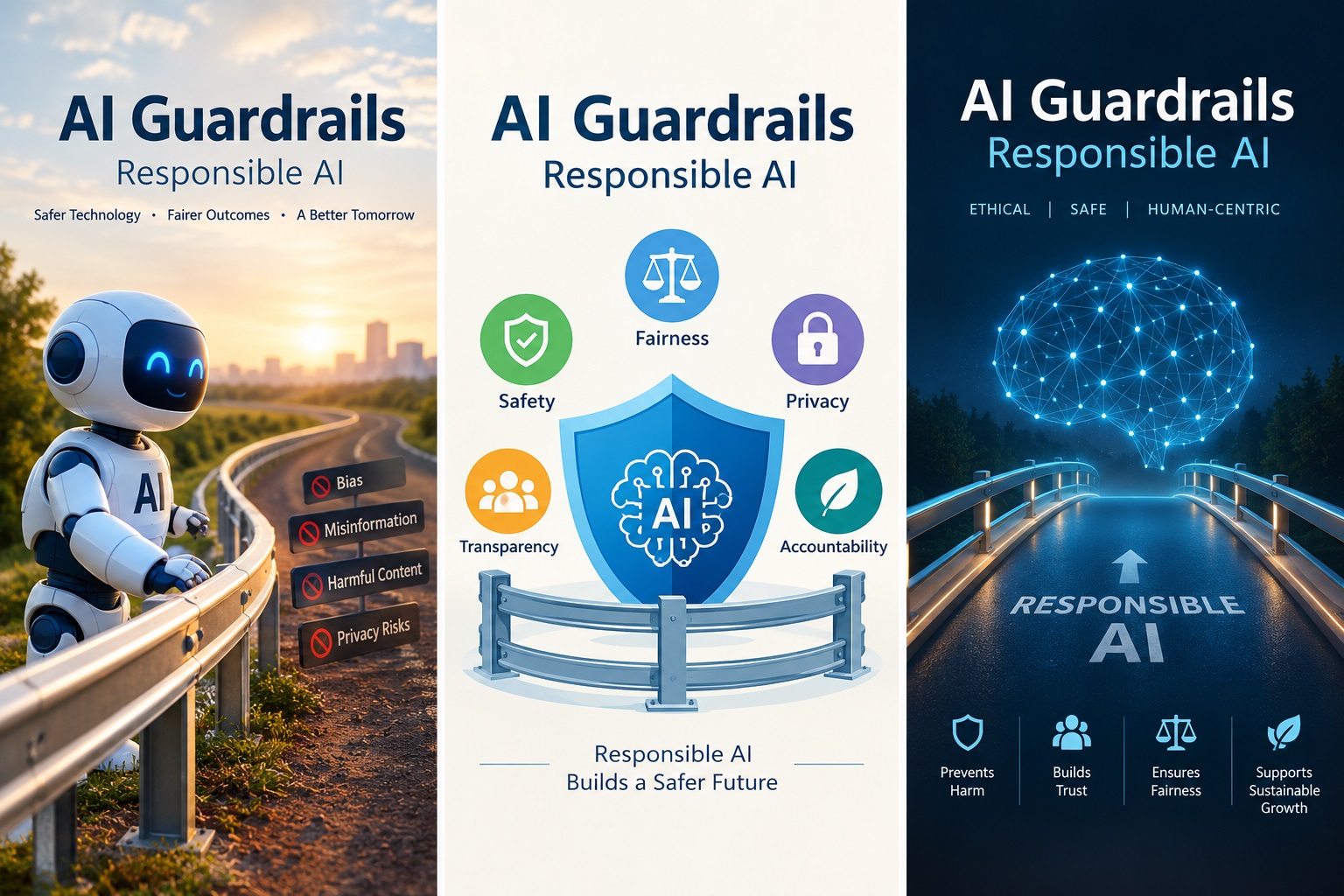
AI guardrails are the rules, filters and monitoring tools that keep an AI system operating within ethical, legal and technical boundaries. They can block harmful or off-topic outputs, protect private data, limit what actions an AI agent may take, and flag problems for human review. Think of them as lane markers and barriers on a road: they don't drive the car, but they reduce the chance of a crash.
What Is Responsible AI?
Responsible AI is the broader practice of building and using AI in ways that are fair, transparent, accountable, secure and respectful of privacy. Common principles include:
- Fairness: reduce bias and discrimination in outputs and decisions
- Transparency: be open about when and how AI is used
- Accountability: a human or team owns the outcome
- Privacy and security: protect personal and confidential data
- Reliability and safety: test systems and monitor them in use
In short, responsible AI is the "what and why." Guardrails are part of the "how."
Types of Guardrails
Input guardrails
Check what goes into the model: block malicious prompts, remove sensitive data such as ID or card numbers, and restrict topics the system should not handle.
Output guardrails
Check what comes out: filter harmful, biased or false content, require citations for factual claims, and enforce format and tone.
Action guardrails
Matter most for AI agents that can use tools. They limit what an agent may do, such as spending money, sending emails or deleting files, and require human approval for risky steps.
Monitoring and observability
Log prompts, outputs and errors so teams can detect drift, abuse or failures over time. This is the area behind the growing interest in "AI observability."
Real-World Examples
- A customer-service chatbot that refuses to give legal or medical advice and hands off to a human
- A hiring tool that is regularly audited for biased outcomes across groups
- A writing assistant that strips personal data before processing a document
- An AI agent that must get approval before making a payment
Smart Copy PRO
Turn copied text into summaries, professional emails and LinkedIn-ready content in seconds.
Get Smart Copy PRO →A Practical Responsible-AI Checklist
- Define the purpose. Write down what the AI should and should not do.
- Protect data. Never paste passwords or confidential records into public tools.
- Keep a human in the loop for decisions that affect people's money, health, jobs or rights.
- Fact-check outputs before publishing or acting on them.
- Test for bias and failures with varied, realistic examples.
- Disclose AI use where it matters to your audience.
- Log and review. Check outputs regularly and fix recurring problems.
- Follow the rules. Check data-protection and industry regulations that apply to you.
Better prompts help too. Our prompt engineering guide shows how clear constraints and context reduce unwanted outputs.
What Guardrails Can't Do
Guardrails reduce risk but do not remove it. Filters can miss clever misuse or block harmless content, and rules can fail in situations nobody anticipated. They work best alongside testing, human oversight and ongoing monitoring, not as a substitute for them.
Key Takeaways
- Guardrails are practical controls. Responsible AI is the wider approach.
- Use input, output, action and monitoring guardrails together.
- Agents that take actions need the strictest limits and human approval.
- Even small teams can follow simple habits: protect data, fact-check, disclose.
- No guardrail is perfect, so keep testing and monitoring.
Frequently Asked Questions
What are AI guardrails?
AI guardrails are rules, filters and monitoring tools that keep an AI system within ethical, legal and technical boundaries, for example by blocking harmful outputs or protecting private data.
What is the difference between guardrails and responsible AI?
Responsible AI is the broader approach covering fairness, transparency and accountability. Guardrails are the practical controls that help enforce those principles in a running system.
Can guardrails make AI completely safe?
No. Guardrails reduce risk but cannot remove it. They work best combined with testing, human oversight and ongoing monitoring.
Do small businesses and bloggers need responsible AI practices?
Yes. Even basic habits such as fact-checking AI output, protecting private data and disclosing AI use build trust and reduce legal and reputational risk.
Conclusion
Responsible AI isn't a brake on innovation. It's what makes AI trustworthy enough to use at scale. Start with the checklist above, add stronger guardrails as your use of AI grows, and keep a human accountable for the results.
Explore More on BITOMANCY
Want more practical AI and technology guides? Visit the BITOMANCY homepage for more articles on artificial intelligence, automation, SEO and emerging technology.