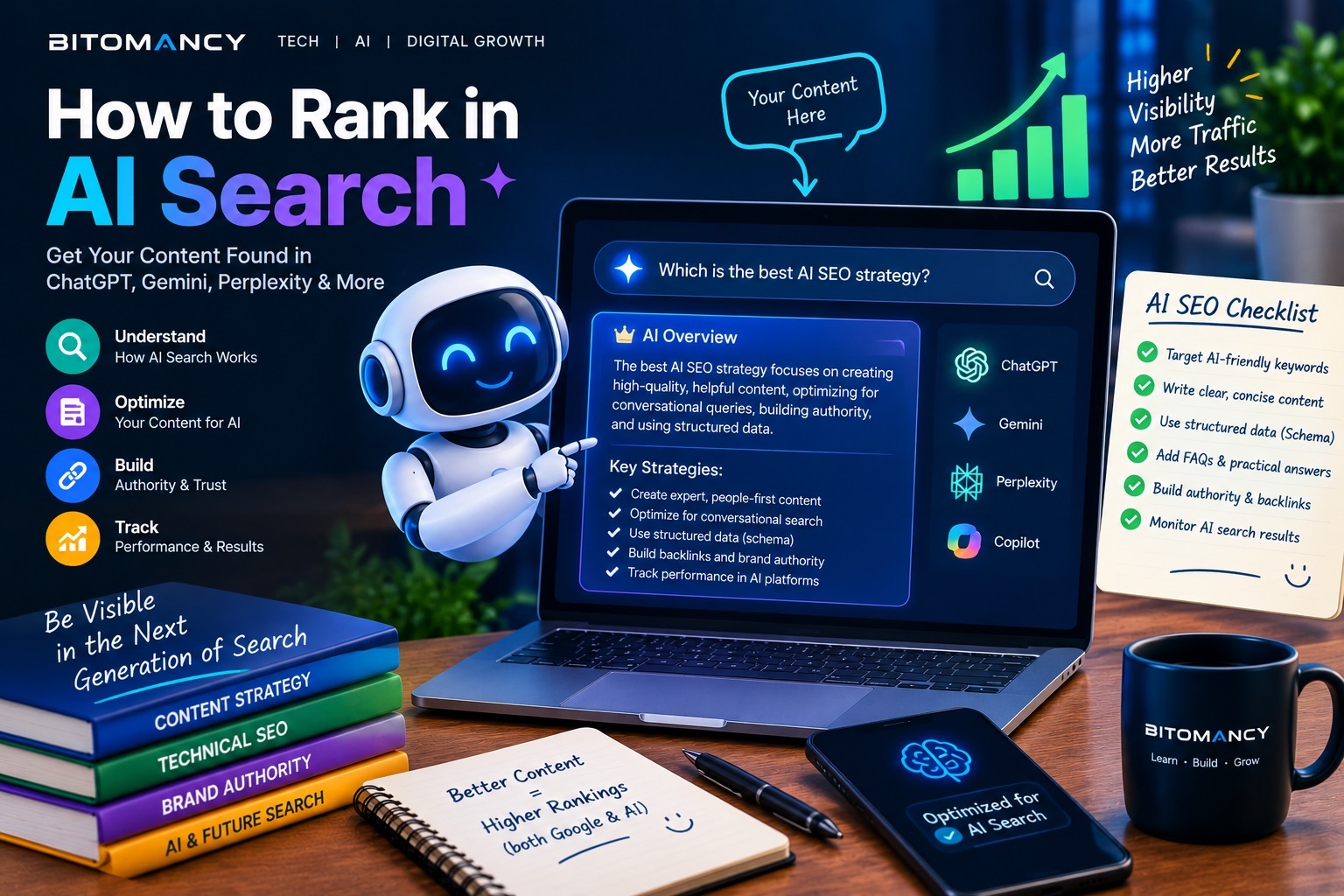
Searchers increasingly get a summarized answer before they ever click a link. That has made "AI SEO" one of the fastest-rising search topics in the US this month, according to trend tracker Exploding Topics.
The good news: you don't need a completely new playbook. AI search features pull from the same web that classic search does, so pages that are clear, trustworthy and well structured are the ones most likely to benefit. This guide shows what to change and what to keep.
In This Guide
- What is AI SEO?
- What changed, and what didn't
- 9-step AI SEO checklist
- How to measure results
- Mistakes to avoid
What Is AI SEO?
AI SEO is the practice of optimizing content so it ranks in traditional search results and is also understood, summarized or cited by AI-powered search features and assistants. You may also see it called generative engine optimization (GEO) or answer engine optimization (AEO). The names differ, but the goal is the same: be the most useful, most trustworthy source on a topic.
What Changed, and What Didn't
What changed: users ask longer, more conversational questions, and AI features reward pages that answer them directly and clearly. Visibility now includes being quoted or referenced, not only being ranked.
What didn't: crawlability, page speed, helpful original content, and real authority still matter most. If your site can't be crawled or doesn't deserve trust, no formatting trick will fix it. Our SEO system guide covers those foundations.
9-Step AI SEO Checklist
1. Answer the question first
Put a clear, direct answer in the first paragraph under each heading, then expand. This "answer-first" style helps both readers and AI systems extract the point.
2. Write headings as real questions
Use H2s and H3s that match how people actually ask, such as "How long does AdSense approval take?" Pull ideas from Google's "People also ask" box and your Search Console queries.
3. Show real experience and expertise
Google's quality guidance emphasizes experience, expertise, authoritativeness and trust (E-E-A-T). Add first-hand screenshots, tested results, named authors with bios and clear sources. Generic summaries are the easiest content for AI to replace.
4. Add original value
Include something a summary can't copy: your own data, a worked example, a tool or a strong opinion backed by evidence. Original material is also what earns links.
5. Use clean structure
Short paragraphs, descriptive subheadings, lists and tables make content scannable. Add a table of contents with anchor links on long posts.
6. Add structured data
Use Article, FAQPage and BreadcrumbList schema (JSON-LD) so search engines understand your page. Schema doesn't guarantee rankings, but it removes ambiguity. Only mark up content that is actually visible on the page.
7. Fix technical health
Make sure pages load fast, work on mobile, are indexable and appear in your sitemap. See our guide to launching a fast website on a custom domain.
8. Build topical authority
Instead of random posts, publish clusters: one main guide plus several detailed supporting articles, all interlinked. For example, link this post with your prompt engineering guide and AI agents explainer.
9. Keep content fresh
Update statistics, screenshots and dates when things change, and show a clear "last updated" date. Outdated pages lose trust quickly in fast-moving topics.
Smart Copy PRO
Turn copied text into summaries, professional emails and LinkedIn-ready content in seconds.
Get Smart Copy PRO →How to Measure Results
- Google Search Console: track impressions, clicks and which questions you appear for.
- Manual checks: search your target questions and note whether your page is cited or summarized.
- Engagement: watch time on page and returning visitors, since clicks from AI answers are often fewer but more qualified.
Mistakes to Avoid
- Publishing mass-produced AI text with no editing or original insight
- Stuffing keywords instead of answering the question
- Adding schema for content that isn't on the page
- Ignoring technical problems while chasing new tactics
- Expecting overnight results. Authority builds over months.
Key Takeaways
- AI SEO builds on classic SEO. Fundamentals still win.
- Answer questions directly, then add depth and original value.
- Show real experience, authorship and sources to earn trust.
- Use structured data and clean formatting to remove ambiguity.
- Build interlinked topic clusters and keep them updated.
Frequently Asked Questions
What is AI SEO?
AI SEO is the practice of optimizing your content so it ranks in traditional search results and is also understood, cited or summarized by AI-powered search features and assistants.
Is traditional SEO dead because of AI search?
No. AI search features still rely on crawlable, trustworthy, well-structured web pages. Strong fundamentals such as helpful content, technical health and authority remain the foundation.
Can I use AI to write my SEO content?
Yes, as a drafting aid, but pages must be helpful, accurate and original. Edit heavily, fact-check and add your own experience before publishing.
Does schema markup help with AI search?
Structured data helps search engines understand your page. It does not guarantee rankings or citations, but it removes ambiguity about what your content is.
Conclusion
AI hasn't replaced SEO. It has raised the bar. The sites that win will be the ones that answer clearly, prove real expertise and stay technically sound. Start by auditing your five most important pages against the checklist above, then work outward.
Explore More on BITOMANCY
Want more practical AI and technology guides? Visit the BITOMANCY homepage for more articles on artificial intelligence, automation, SEO and emerging technology.